Compare
KI BMS vs d.vinci: established German ATS vs modern specialist
d.vinci has guided big German employers through their recruiting programmes since 2002. KI BMS is the lean 2026 answer - same market specificity, different generation of tooling.


At a glance
d.vinci is right for German corporates and large mid-markets from 250 staff that want an established ATS with deep approval workflows, multi-level permissions, and long market presence. KI BMS is right for modern mid-markets up to 100 staff that want KI pre-sort as a default, value monthly contracts, and don't want a 6-month implementation process. Both are German-centric, both understand GDPR - they target different generations of buyers.
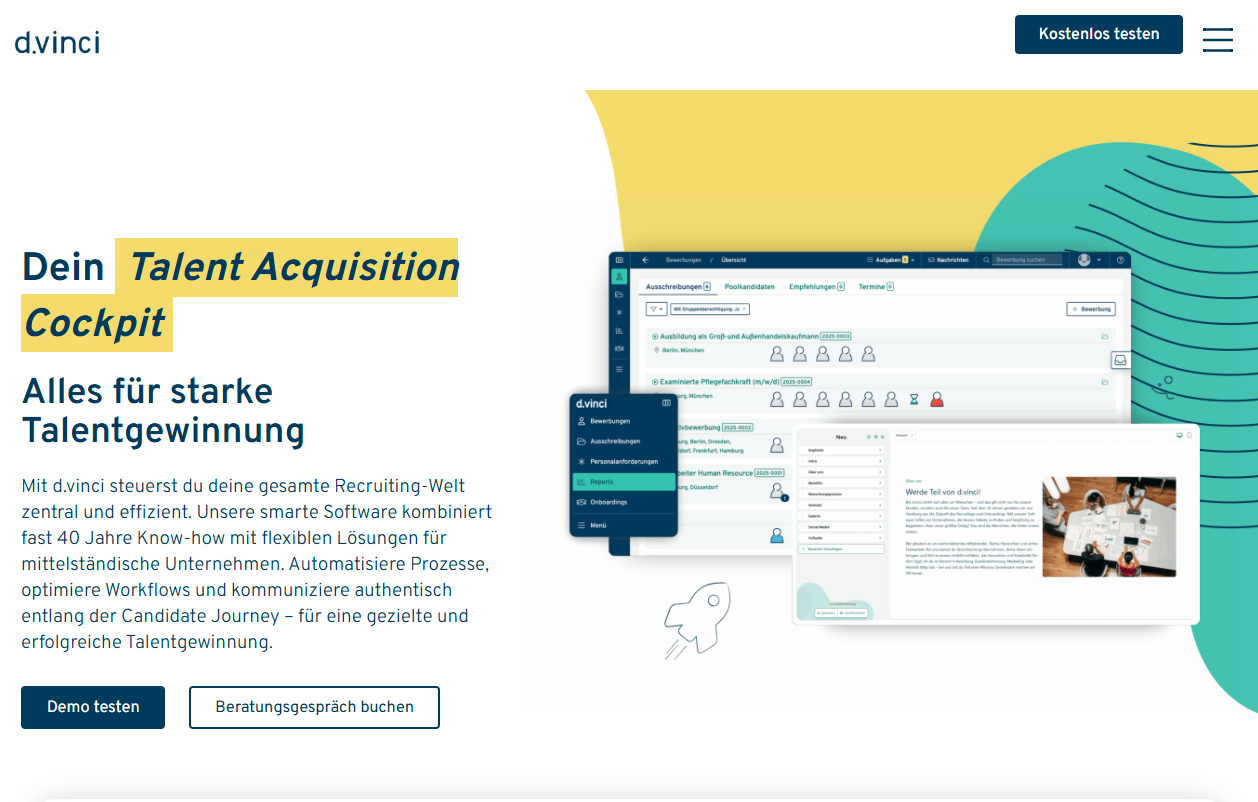
KI BMS vs d.vinci: feature comparison
When to pick which
Pick KI BMS when
Pick d.vinci when
d.vinci has built a German recruiting tool since 2002, growing through many corporate compliance audits. The result: a tool with German legal grounding, German implementation partners, German implementation tradition. If you're buying an ATS in a 1,000-person company, d.vinci is a vendor that speaks procurement's language.
Strength is depth: multi-level approval workflows where hiring manager - works council - leadership all sign off, fine-grained permissions where a coordinator only sees roles in one division. That's corporate reality, and d.vinci does it maturely. Teams also thinking about structured interviews will find these two needs often travel together in larger organisations.
What the other generation of tooling does differently
KI BMS was built 22 years after d.vinci. We did three things differently: KI is default, not module (every role has KI screening available, no surcharge). Setup is self-serve, not implementation (free tier, 8-minute onboarding, no partner). Prices are public, not quote-only (€0, €1, €10/month, monthly cancellation). These three decisions don't fit corporate procurement reality - they fit modern mid-market reality where HR values speed and clarity.
Concrete selection grid
Three questions lead to the right pick. One - do you have a works council co-signing ATS decisions? Yes -> d.vinci has the matching approval stack. No -> KI BMS suffices. Two - do you need permissions per division, site or subsidiary? Yes -> d.vinci. No -> KI BMS. Three - how many roles per year? <30 -> KI BMS clearly; 30-100 -> both possible, KI BMS cheaper; 100+ -> d.vinci stack-fit is better. If you're still evaluating what applicant tracking software delivers in the first place, that article is a good starting point.
Try KI BMS
Free plan, no credit card. We host in Germany. You can export and delete everything self-serve.
Written by
Julia Yukovich
Co-Founder + CEO
Julia is one of the Co-Founders. She handles design, development, product direction, and most of the support replies that arrive in the morning.
Read next
KI BMS vs rexx HR: heavy suite vs lean specialist
rexx HR covers the full HR spectrum + ATS in a suite. KI BMS is recruiting only - but faster and with KI from day 1.
Read
KI BMS vs Personio: the right recruiting tool for modern HR teams
Suite vs specialist: when an integrated HR tool wins - and when a dedicated ATS sets you free.
Read
Applicant tracking software compared: the honest ATS overview for 2026
The central ATS comparison: criteria, categories, and a head-to-head with every vendor.
Read
KI BMS vs concludis: established German e-recruiting vs modern specialist
Established German e-recruiting with multi-posting vs modern KI-default tool. Procurement vs self-serve.
Read